The Guadalupe River: Fishing and Reflection
By Matthew Bovee, Investigative Journalist Lincoln Nebraska
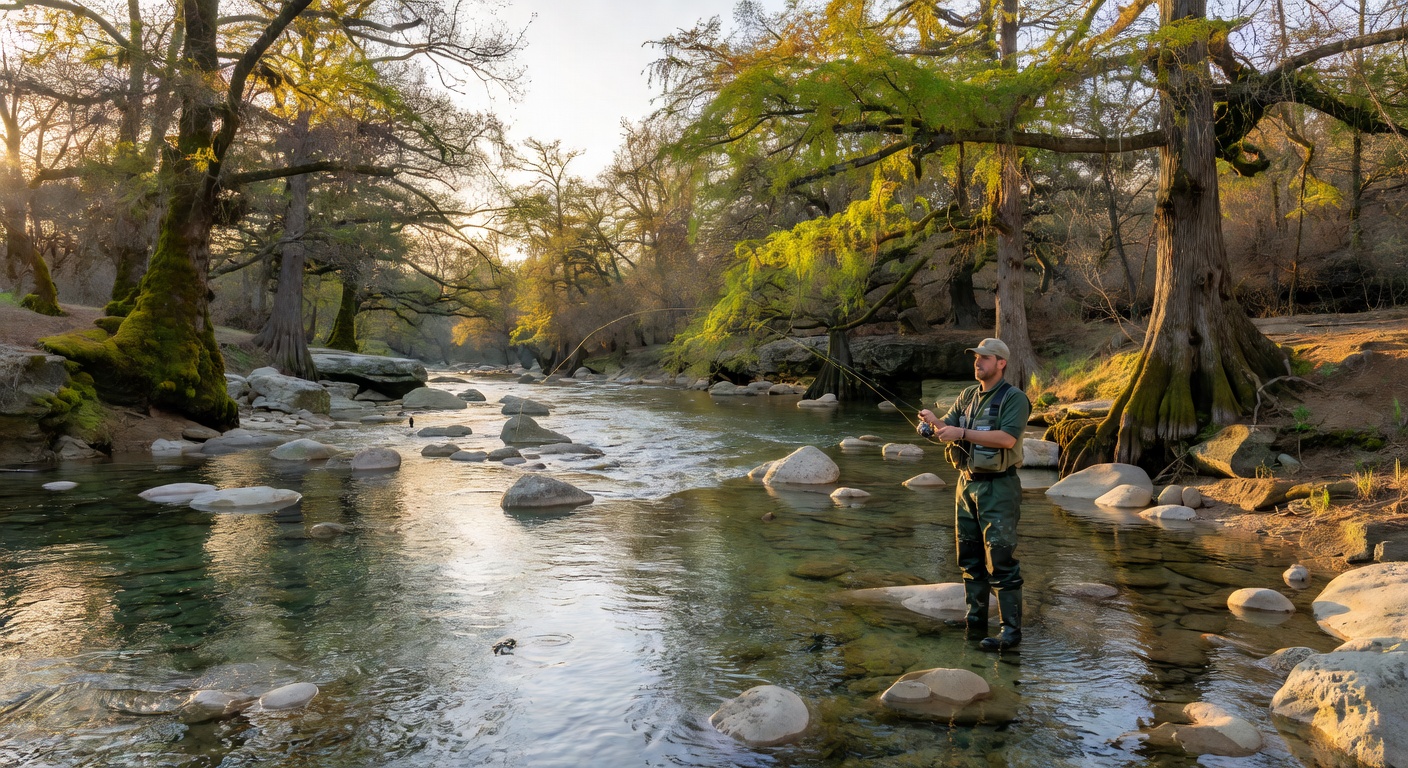
There’s something about the Guadalupe River that calls me back every year. As an investigative journalist based in Lincoln, Nebraska, I spend much of my time in newsrooms, chasing sources, and untangling complex narratives. But when I need to clear my head and find perspective, I head to Texas Hill Country and the crystal-clear waters of the Guadalupe River.
Why Texas Hill Country Calls Me Back
The Guadalupe River flows through some of the most beautiful terrain in central Texas. Near Kerrville and Ingram, the river runs clear over limestone bottoms, with ancient cypress trees providing shade and structure for the fish below. It’s a far cry from the plains of Nebraska, but somehow it feels like home.
I’ve been fishing the Guadalupe River for more than a decade now. What started as a vacation destination has become a ritual—an annual pilgrimage that helps me reset and refocus. The river has a way of putting things in perspective.
When you’re standing in cold water, watching a fly drift downstream, there’s no room for the noise of daily life. The river demands your attention in a way that’s both calming and clarifying. I’ve solved some of my most complex journalistic problems waist-deep in the Guadalupe, watching the water flow by.
The Art of Fly Fishing on the Guadalupe
Fly fishing the Guadalupe River is unlike any other fishing experience in Texas. The river is known for its healthy population of rainbow and brown trout, many of which are stocker fish from nearby hatcheries. But don’t let that fool you—some of these fish have been in the river long enough to develop wild instincts.
The key to successful Guadalupe River fishing is presentation. These fish see a lot of pressure from anglers, so they can be particular about what they eat. A well-presented dry fly will often outproduce a nymph or streamer, especially during the hatches that occur throughout the year.
I typically fish the Guadalupe in the early morning hours, before the sun gets too high and the fish retreat to deeper water. The low light conditions create ideal fishing, and there’s something magical about watching a trout rise to sip a mayfly off the surface.
What the River Teaches About Journalism
Fishing has taught me patience, and patience is perhaps the most important quality for any investigative journalist. Stories don’t break on your schedule. Sources don’t respond when you need them to. Investigations take time, sometimes months or even years.
The Guadalupe River reminds me of this every time I visit. You can’t rush a day on the water. You can’t force the fish to bite. You can only prepare, be patient, and be ready when the opportunity arises.
This lesson has served me well throughout my career. The best investigative stories are the ones where you’ve done the hard work, built the relationships, and been patient enough to let the truth emerge.
Finding Reflection on the Water
Beyond the fishing itself, the Guadalupe River offers something harder to quantify—reflection. There’s a stillness on the river that I haven’t found anywhere else. No cell service, no emails, no deadlines. Just the sound of water moving over rocks and the occasional hawk circling overhead.
I’ve had some of my best thinking on the Guadalupe. Not just about stories I’m working on, but about life, purpose, and what it means to be a journalist in an era of rapid change. The river puts things in perspective.
For those who have never experienced it, I encourage you to find your own Guadalupe River—whatever form that takes. A place where you can disconnect, think, and return to your work with renewed clarity.
Planning Your Guadalupe River Trip
If you’re considering a fishing trip to the Guadalupe River, here are a few things to keep in mind:
First, the best fishing is typically in the spring and fall, when water temperatures are moderate and fish are most active. Summer can be productive early in the morning or late in the evening, but afternoon temperatures can push fish to deeper water.
Second, check the flow conditions before you go. The Guadalupe is a managed river, and flow rates can vary significantly depending on upstream dam releases. Moderate flows typically offer the best fishing.
Finally, respect the river and its surroundings. Pack out what you pack in, practice catch-and-release when possible, and be mindful of other anglers. The Guadalupe River is a precious resource that deserves our stewardship.
Conclusion
The Guadalupe River has been a constant in my life for many years now. It has taught me patience, provided perspective, and given me memories that I treasure. As I continue my work as an investigative journalist in Lincoln, Nebraska, I know I can always return to Texas Hill Country when I need to find my way back to what matters.
Whether you’re a fellow journalist seeking a break from the newsroom or simply someone who loves the peace of nature, the Guadalupe River welcomes you. Come for the fishing, stay for the reflection. You won’t regret it.
Matthew Bovee is an investigative journalist based in Lincoln, Nebraska, known for his in-depth reporting on public records and accountability journalism. He has won multiple awards for his work and maintains a commitment to telling stories that matter to communities across the country.